British Airways Passenger Reveals Terror During Emergency Landing
Witness account from distressed BA flight passenger describes moments of fear before safe landing at Heathrow. Read firsthand account of emergency.
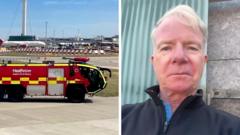
Passenger Account from British Airways Emergency Flight
A British Airways emergency landing at London's Heathrow Airport earlier this month has been recounted through the eyes of one passenger who experienced the ordeal firsthand. Edward Killiwick was aboard the aircraft when the crew issued a distress signal, setting off an intense sequence of events that would test the nerves of everyone on board. The British Airways emergency landing concluded safely, but not before passengers endured moments of genuine uncertainty and fear.
Inside the Cabin During the Crisis
Killiwick's recollection of the incident provides a rare glimpse into the psychological impact experienced by those trapped in such circumstances. From his vantage point in the cabin, he witnessed the emotional responses of fellow travelers as the gravity of the situation became apparent. The atmosphere shifted dramatically once announcement confirmed the severity of the predicament, with previously calm passengers suddenly confronting their vulnerability at thousands of feet above the ground.
Moments of Intense Emotion
The passenger described how the reality of potential danger crystallized when the crew communicated essential safety information. Those sitting near him exhibited visible signs of distress, with some passengers expressing their innermost fears aloud. The collective anxiety that permeated the cabin during those critical minutes created an environment where survival instincts took precedence over social restraint, leading some to vocalize thoughts they might otherwise have kept private.
The Descent and Landing Procedure
As the aircraft began its emergency descent toward Heathrow, flight attendants maintained their professional demeanor while executing their emergency protocols with precision. The British Airways crew demonstrated the training and composure required in such scenarios, providing reassurance to passengers even as technical concerns demanded their full attention. Killiwick observed how the cabin crew's steady presence helped prevent complete panic, anchoring passengers with a sense that trained professionals were managing the crisis.
Final Approach to Safety
The approach to the runway involved careful coordination between the aircraft and ground control. Emergency services were positioned and ready as the plane made its final descent, adding an external layer of security for those aboard. The landing itself, despite the circumstances that preceded it, proceeded without additional complications, allowing the aircraft to touch down safely on the Heathrow tarmac.
Reflections on Survival and Resilience
Killiwick's account highlights the psychological toll that emergency situations impose on air travelers, even when outcomes are ultimately positive. The British Airways emergency landing, while resolved safely, left lasting impressions on those who experienced the uncertainty. His willingness to recount the experience contributes to public understanding of how passengers respond when confronted with genuine danger at altitude, and how crew training translates into practical safety outcomes.
Understanding Aviation Safety Protocols
The incident underscores the critical importance of rigorous training protocols within commercial aviation. British Airways, as a major international carrier, maintains strict adherence to emergency procedures that prioritize passenger safety above all other considerations. Every element of the emergency response—from initial distress communication to coordinated ground operations—reflects decades of aviation safety evolution and regulatory oversight.
The fact that this British Airways emergency landing concluded without casualties or injuries speaks to the effectiveness of these systems working in concert. Modern aircraft possess redundant safety systems designed to handle precisely these kinds of situations, and the crews operating them receive extensive preparation for scenarios most will never encounter during their careers.