Hamas Disarmament Strategy Presents Complex Challenges Amid Gaza Conflict
Explore the obstacles and limited prospects of implementing a Hamas disarmament plan in Gaza. Analysis of political realities and humanitarian challenges.
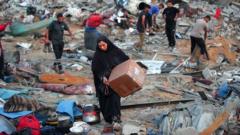
Hamas Disarmament Plan: Navigating Complex Political Terrain
The prospects for Hamas disarmament in Gaza represent one of the most challenging issues confronting international mediators and regional stakeholders. While the proposed framework for Hamas disarmament Gaza offers some potential pathways toward stability, the underlying obstacles remain formidable and multifaceted in nature.
Political Realities Complicating the Situation
The political landscape surrounding any potential agreement proves exceptionally intricate. Multiple parties bring competing interests to negotiations, each with distinct priorities and red lines. Governmental positions, international pressure, and internal faction dynamics create layers of complexity that extend far beyond simple diplomatic exchanges.
Regional powers maintain divergent views on what constitutes acceptable outcomes. Some nations prioritize security concerns, while others emphasize humanitarian considerations. This divergence of interests significantly hampers efforts to forge consensus on disarmament mechanisms and implementation timelines.
The Legacy of Conflict and Its Consequences
Years of ongoing tensions have created profound mistrust among all parties involved. The deaths of thousands and the extensive destruction throughout Gaza have left deep scars on communities and institutions. This accumulated trauma makes confidence-building measures extraordinarily difficult to implement effectively.
The psychological and physical devastation requires years of reconstruction efforts. Infrastructure lies damaged across vast areas, and displaced populations continue facing severe humanitarian challenges. These conditions naturally complicate efforts to introduce disarmament protocols or reduce militant capabilities.
Security Concerns and Trust Deficits
Zero trust characterizes current relationships between parties to any potential agreement. Organizations like Hamas maintain significant capacity for independent action, making verification mechanisms essential yet inherently contentious. Establishing credible monitoring systems that all parties accept presents a fundamental obstacle.
International observers would need unrestricted access to verify compliance with disarmament provisions. Yet granting such access raises sovereignty concerns and security risks that many actors find unacceptable. Balancing transparency requirements against legitimate security interests remains unresolved.
Humanitarian Dimensions of Gaza Reconstruction
The destruction of Gaza extends across residential areas, medical facilities, educational institutions, and commercial zones. Rebuilding efforts require substantial international investment and coordination. Any disarmament agreement must include provisions addressing reconstruction priorities and funding mechanisms.
The civilian population's immediate needs—shelter, food, medical care, and education—demand urgent attention alongside political negotiations. Failing to address these humanitarian imperatives undermines public support for any agreement and threatens its long-term viability.
Limited Yet Meaningful Opportunities
Despite these substantial obstacles, the proposed framework for Hamas disarmament Gaza offers certain elements of cautious optimism. Establishing phased reduction schedules could create opportunities for trust-building over extended timeframes. Gradual implementation allows verification mechanisms to function more effectively.
International oversight provides neutral arbitration capacity and reduces bilateral suspicion. Third-party monitoring can offer transparency that unilateral inspections cannot achieve. Structured verification procedures create predictable patterns that enhance confidence in compliance efforts.
Path Forward for Regional Stability
Successful disarmament requires addressing root causes of conflict alongside weapons reduction. Economic development, political representation, and grievance resolution must proceed concurrently with security arrangements. Compartmentalizing these issues typically leads to agreement failure.
Regional stakeholders must commit to long-term engagement and patience throughout implementation phases. Quick fixes consistently fail in contexts of such historical complexity and accumulated grievance. Realistic timelines and sustained international support prove essential for meaningful progress.
The Hamas disarmament Gaza initiative represents neither certain success nor inevitable failure. Rather, it embodies the perpetual tension between hope and realism that characterizes Middle East peace efforts. Moving forward requires acknowledging both the formidable obstacles and the meaningful possibilities that such comprehensive frameworks can generate for affected populations.