Spain's PM Holds Traffickers Accountable Over Ceuta Migration Crisis
Spain's Prime Minister blames human traffickers following unprecedented 60,000 migrant arrivals in Ceuta from Morocco. Learn about the government response and r...
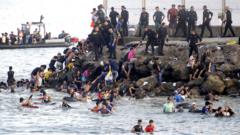
Spain's Prime Minister Addresses Massive Migration Influx
Spain's leadership has directed responsibility toward trafficking networks following an extraordinary Ceuta migration crisis that saw approximately 60,000 individuals enter the Spanish enclave from neighboring Morocco. The Prime Minister's statement highlights the role of organized smuggling operations in facilitating this unprecedented movement of people across the Strait of Gibraltar.
Officials emphasized that human traffickers orchestrated the coordinated arrival, exploiting vulnerable migrants seeking entry into Europe. The government response focuses on both immediate security measures and long-term efforts to dismantle the networks operating in the region.
Rapid Return and Border Management
According to official reports, the majority of migrants who reached Ceuta had returned to Morocco by Friday evening. Spanish authorities coordinated with Moroccan counterparts to manage the humanitarian situation and facilitate the orderly return of those who entered without proper documentation or legal authorization.
The swift resolution of the immediate crisis reflected coordinated efforts between Spanish border authorities and Moroccan security forces, demonstrating bilateral cooperation in addressing irregular migration challenges affecting both nations.
Italy's Response and Schengen Implications
The situation triggered significant diplomatic consequences within the European Union's migration framework. Italy responded by suspending its Schengen agreement on free movement with Madrid, a decisive measure signaling concerns about Spain's border management capabilities.
This suspension represents a substantial statement within Europe's borderless travel system, as the Schengen agreement suspension restricts the free circulation of people between the two countries. Italy's action underscores mounting tensions regarding how individual member states handle migration flows and their obligations to neighboring partners.
Regional Security Concerns
The unexpected scale of migrant arrivals raised urgent questions about security protocols and surveillance systems along Spain's borders. Authorities acknowledged gaps in their ability to anticipate and prevent such coordinated movements across maritime routes.
The Spain Morocco migrants situation highlighted vulnerabilities in regional security infrastructure, prompting Spanish officials to call for enhanced European support and increased funding for border management initiatives. The government stressed that individual nations cannot effectively address transnational smuggling networks without coordinated international assistance.
Tackling Human Trafficking Networks
Spain's government intensified its focus on dismantling trafficking operations that facilitate irregular migration. Law enforcement agencies launched investigations into the networks responsible for organizing the mass movement, working alongside international partners to identify and prosecute smugglers.
Human trafficking Spain efforts now encompass greater intelligence sharing with Moroccan authorities and other Mediterranean nations. The collaborative approach aims to target the financial networks sustaining these operations and prevent future incidents of similar magnitude.
European Union Response and Policy Discussions
The incident prompted discussions at European Union level regarding migration management policies and burden-sharing among member states. Brussels acknowledged that Spain, as a frontline nation receiving migrants attempting to reach Europe, requires increased resources and operational support.
The migrant arrivals Ceuta situation reinforced arguments from Spanish policymakers advocating for stronger EU-level border management and enhanced cooperation with North African nations on migration control. EU officials indicated willingness to examine current mechanisms and implement additional support mechanisms for affected member states.
Looking Forward
As Spain works to strengthen its border security measures and international partnerships, the government remains committed to balancing humanitarian obligations with national security interests. Future efforts will focus on preventing organized trafficking networks from exploiting migrants while addressing root causes of irregular migration in the region.